How To Help a Child: 8-12 years
u003cbru003eIf a dyslexic child hasn’t received effective one-to-one support by the age of 8 to 12, they are going to have fallen behind and are likely to need additional accommodations to get them through school. The longer effective intervention is delayed, the more accommodations and support need to be put into place.u003cbru003eu003cbru003eIt is still important for children aged 8-12 to follow an individualised, intensive and systematic program of Structured Literacy, although it will take them longer to catch up with their peers. u003cbru003e
75% of children whose help is delayed to age nine or later continue to struggle throughout their school careers, and it takes four times as long to improve literacy skills. (1)
Accommodations will vary according to the needs of the child:
Accommodations are ways to support a child through school and bridge the gap between their skills and the educational demands being placed on them. They help a child access the curriculum despite having limited reading and spelling ability.
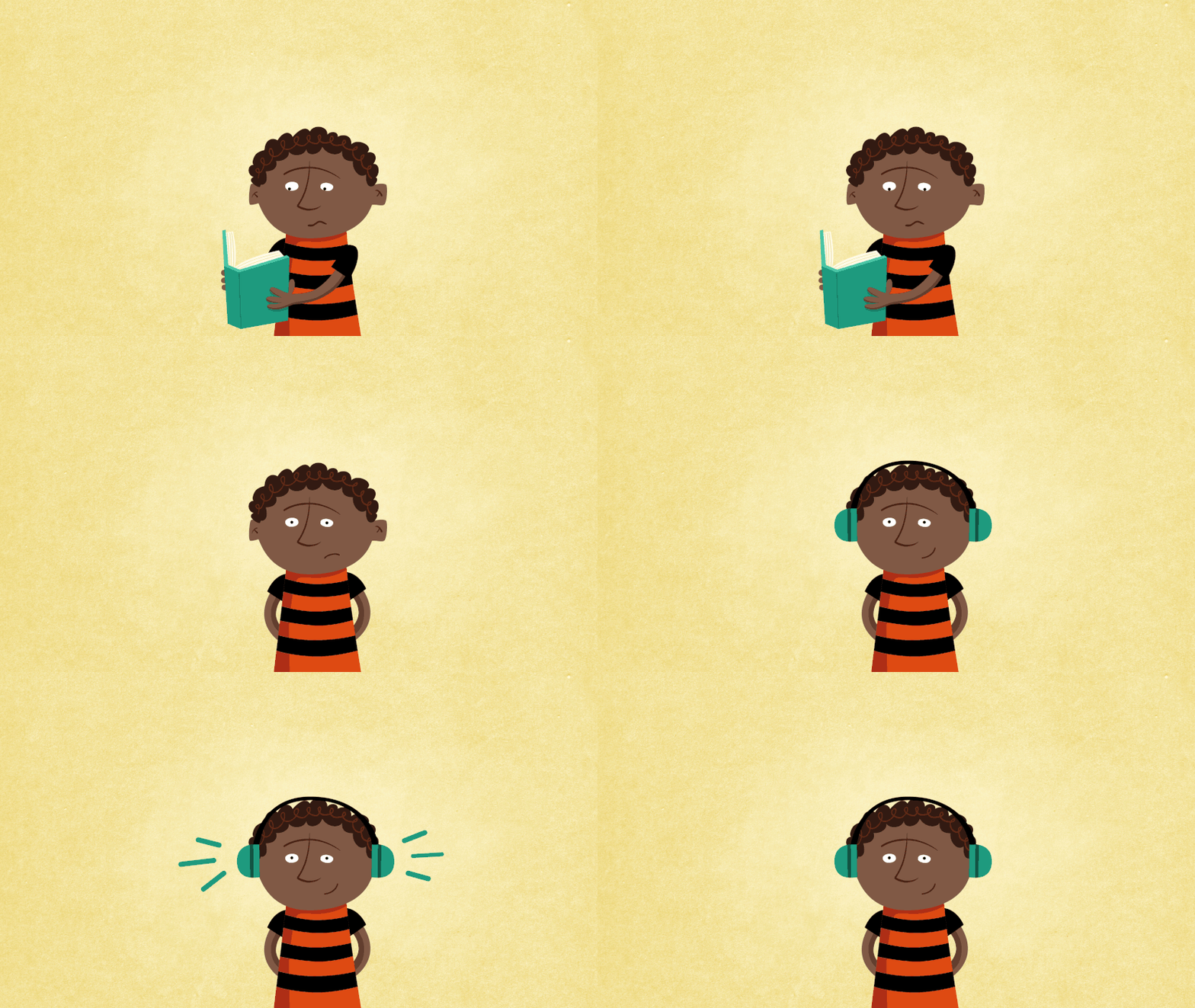
Reading
- Having someone to read for the child or a screen reader.
- Not requiring a child to read aloud in front of other children.
- Less material to read or more time given to complete reading assignments.
- Textbooks in an audio format.
Spelling
- A greatly reduced list of spelling words to learn, perhaps just 2 or 3 words a week.
- If the child is following an individualised program of support, use the same words being learned.
- Give alternative spelling words that are grouped into those that share the same phonics rule.
- High-frequency words are taught by sounding out (orthographic mapping) and supported by mnemonic strategies.
Writing
- Provide the student with a note taker.
- Assign less written work – at least reduced by half.
- Provide a planning framework or organisational helper such as mind mapping.
- Teach key words.
Other
- Give extra time on tests or examinations.
- Allow students to use a smartphone or tablet to take photographs of notes.